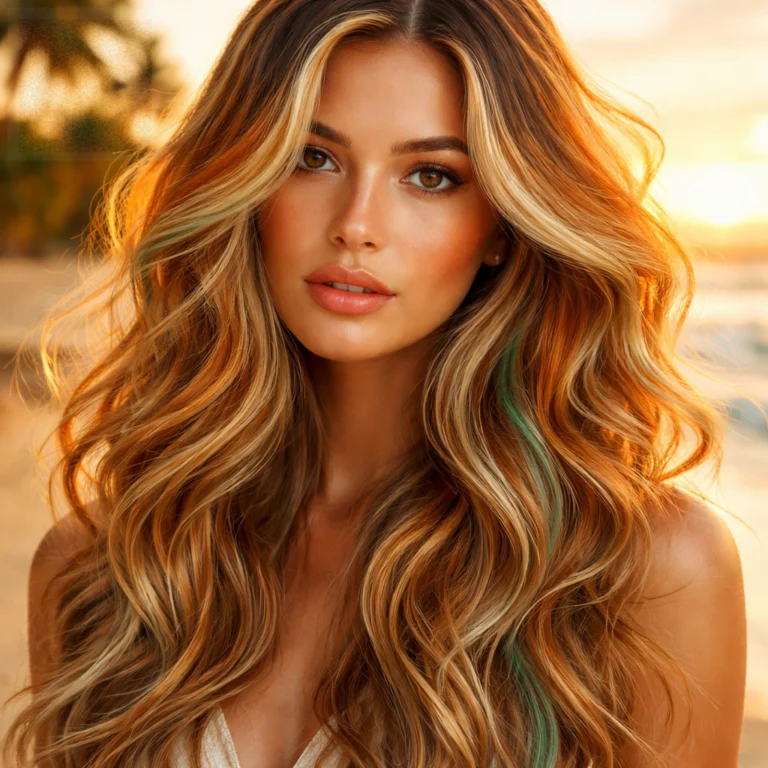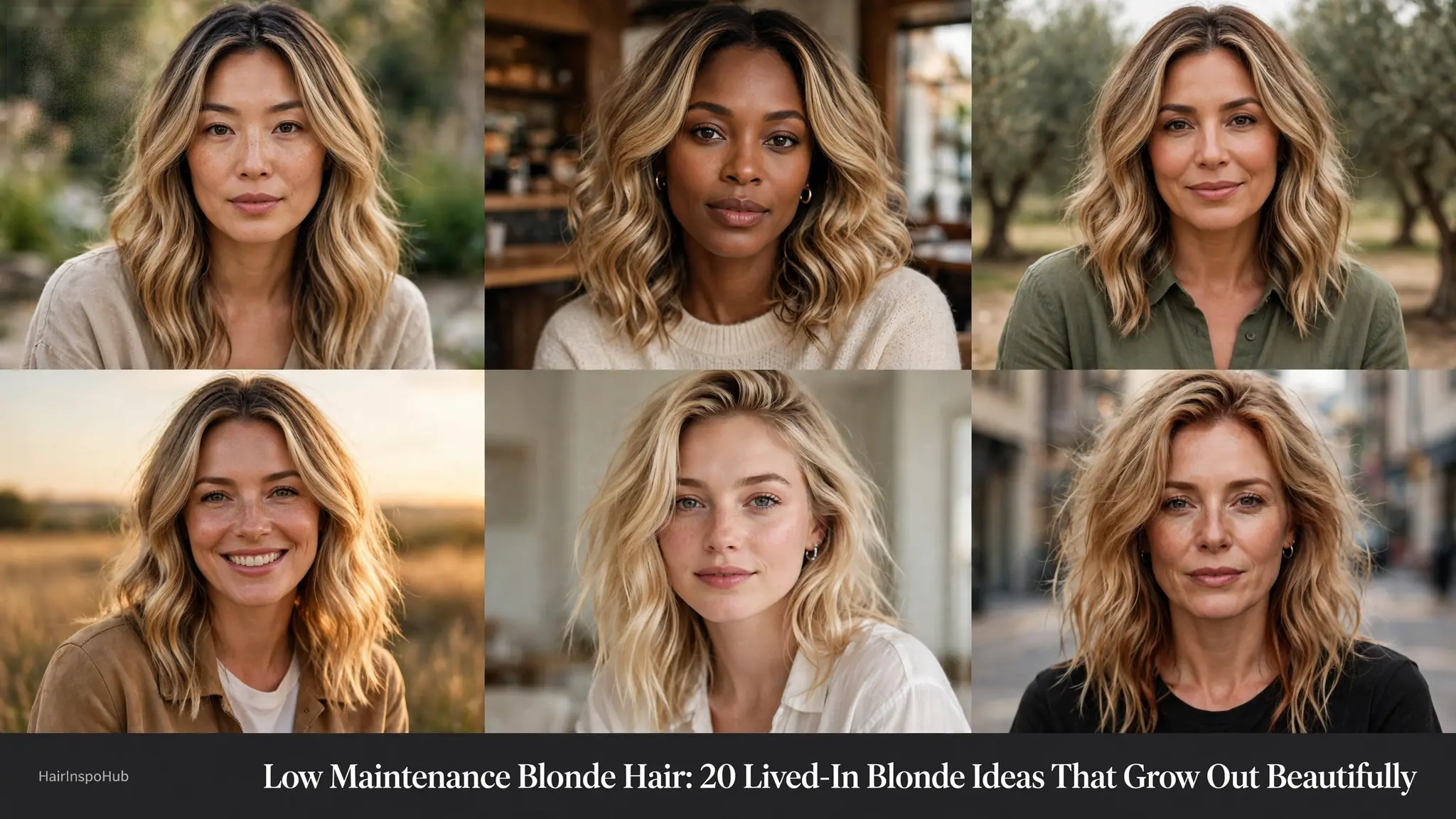
Low Maintenance Blonde Hair: 20 Lived-In Blonde Ideas That Grow Out Beautifully

Love blonde hair, but not the dark root line that shows up four weeks later? You are not alone. Classic all-over blonde and tight, scalp-to-end highlights look bright on day one, then they lock you into a salon cycle that feels expensive, time-heavy, and hard on your hair.
Low maintenance blonde works differently. The goal is not “no maintenance at all.” The goal is a blonde that still looks intentional at week eight, week twelve, and even month four — because your natural root, the placement, and the tone were planned to grow out together.
In this guide, you will find 20 low maintenance blonde ideas, a quick-pick table, exact words to use at the salon, a realistic maintenance calendar, and simple at-home care that keeps blonde bright without constant touch-ups. Save your favourite look, then show your colorist both the photo and the salon script near the end of this article.
In short: the fastest answer
The lowest-maintenance blonde is a lived-in blonde that stays close to your natural base colour. Rooted balayage, shadow roots, root melts, bronde, dirty blonde, and diffused babylights grow out softly because they do not create a hard line at the scalp. Most people can stretch the main colour appointment to about 3–6 months, with only a short gloss or toner refresh every 6–8 weeks. Platinum and very icy all-over blonde are beautiful, but they are not low maintenance on a dark natural base.
What “low maintenance blonde” really means
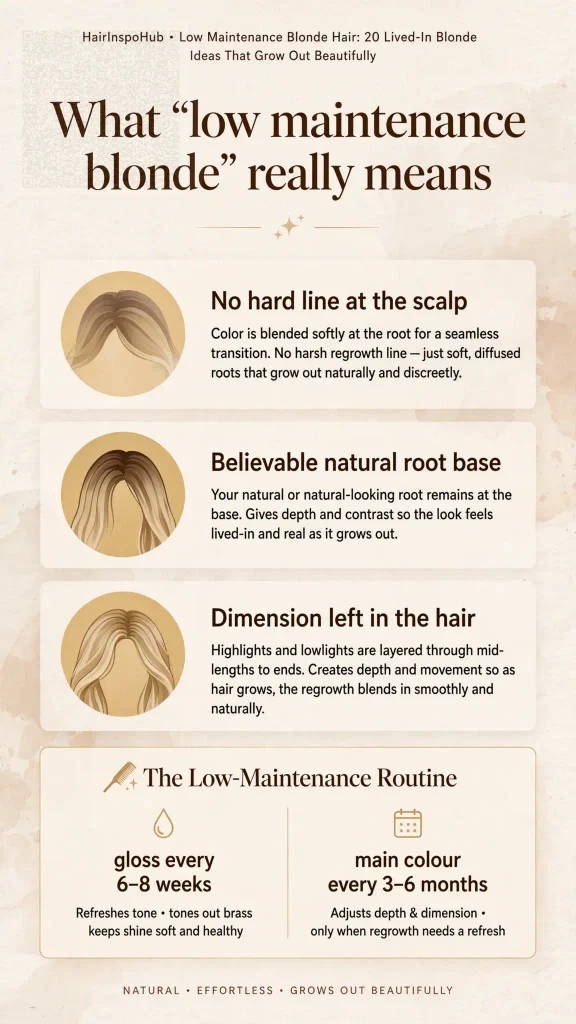
Low maintenance blonde is a colour design, not just a shade name. The same honey blonde can be high maintenance if it is painted in solid foils right up to the scalp, or low maintenance if it is melted into your roots with dimension left between the light pieces.
A truly low-upkeep blonde follows three rules:
- No hard line: where the blonde starts, so new growth blends instead of showing a stripe.
- A believable base: the blonde is close enough to your natural base that fading and regrowth still look balanced. On dark hair, warm and neutral shades usually stretch further than icy platinum.
- Dimension stays: some of your natural depth stays in the hair. Those darker pieces make the blonde look brighter and stop the colour from turning flat.
Hair grows about half an inch per month on average. Traditional highlights taken right to the root can show a clear line in 4–6 weeks. Lived-in placement staggers where each light piece begins, so the same growth looks like part of the design.
Quick-pick table: 20 low maintenance blonde ideas
Use this table to shortlist two or three looks before your salon visit. “Salon rhythm” means the usual gap between bigger colour appointments when the hair is cared for at home. A short gloss appointment may still be needed between them.
| Idea | Best for | Tone | Typical salon rhythm |
| Rooted blonde balayage | Most bases; first-time blonde | Warm to neutral | 3–5 months |
| Shadow-root blonde | Bright blonde lovers with visible roots | Neutral to cool | 3–4 months |
| Creamy vanilla root melt | Light brown to dark blonde bases | Neutral-warm | 3–5 months |
| Soft face-frame blonde | Brightness around the face only | Any | 3–4 months |
| Diffused babylights | Fine hair; grey blending | Any | 3–5 months |
| Honey blonde with natural roots | Warm skin; brown bases | Warm | 3–5 months |
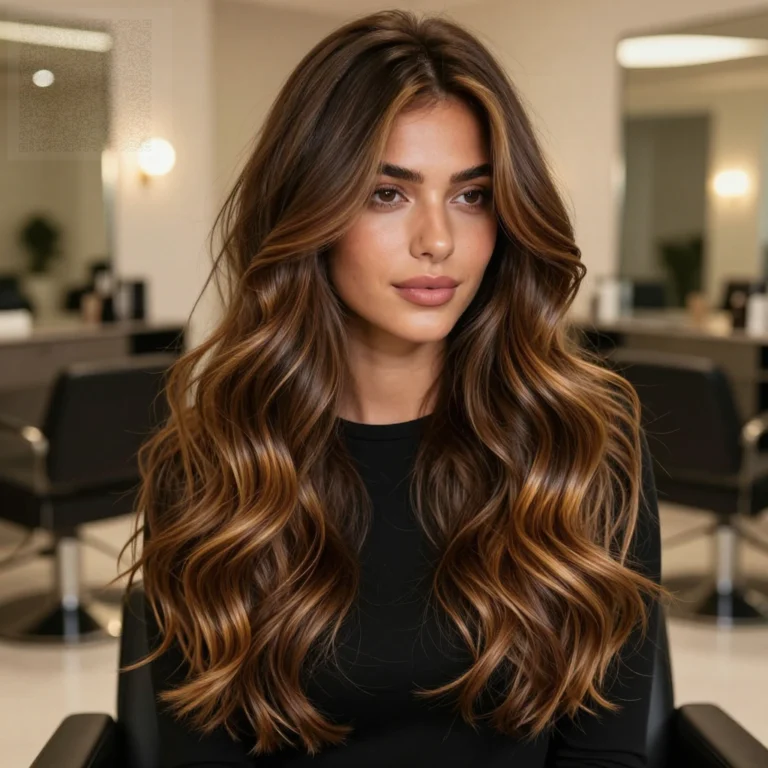
| Golden bronde | Brunettes going lighter safely | Warm | 4–6 months |
| Butterscotch blonde | Blondes wanting less root contrast in autumn/winter | Warm | 3–5 months |
| Caramel ribbon blonde | Medium to dark brown hair | Warm | 3–5 months |
| Sandy blonde gradient | Long hair; sun-kissed look | Neutral-warm | 4–6 months |
| Mushroom blonde | Cool skin; less bleach contrast | Cool-neutral | 3–5 months |
| Ash-beige blonde | Cool or neutral skin | Cool-neutral | 3–4 months |
| Smoky dirty blonde | Natural blondes and light brunettes | Cool-neutral | 4–6 months |
| Vanilla cream blonde | Soft bright look without icy upkeep | Neutral | 3–4 months |
| Champagne blonde | Fine hair needing light and shine | Neutral | 3–4 months |
| Dirty blonde with subtle highlights | The easiest starter blonde | Neutral-warm | 4–6 months |
| Dark bronde with blonde ends | Dark bases; low salon time | Warm to neutral | 4–6 months |
| Lowlights blend (reverse balayage) | Over-lightened, flat blonde | Matches your base | 3–5 months |
| Shadow-root blonde lob | Short to medium hair | Any | 3–4 months |
| Long layered lived-in blonde | Long hair; polished waves | Any | 3–5 months |
Bright but forgiving: lived-in blondes that still feel light
1. Rooted blonde balayage
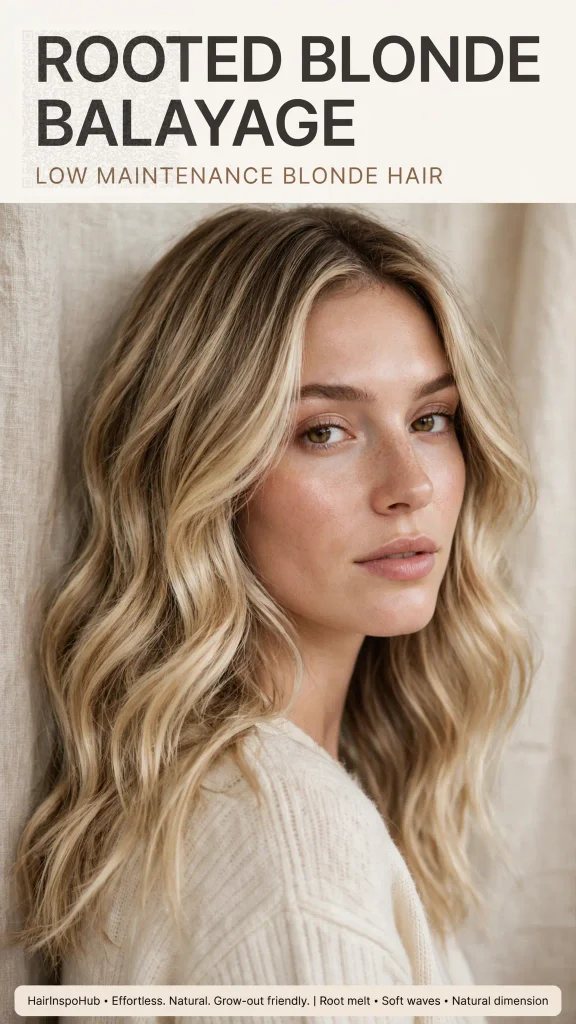
This is the classic low maintenance blonde. Light pieces are painted where the sun would naturally hit, while your root area stays deeper and softer. Because there is no solid line of blonde at the scalp, regrowth reads as shadow and depth instead of “roots that need fixing.” It looks especially natural in loose waves, but it also works straight because the blend is built into the colour.
- Ask your colorist: “Lived-in balayage with brightness through the mids and ends, feathered away from the root, plus a root melt in my natural shade.”
- Best for: almost everyone, especially brunettes trying blonde for the first time and busy people who cannot visit every month.
- Salon rhythm: a gloss every 6–8 weeks; a bigger refresh in about 3–5 months.
2. Shadow-root blonde
A shadow root is like a soft filter over the top of your highlights. Your colorist keeps the lengths bright, then melts a slightly deeper tone over the root area. The result is high brightness without the harsh first inch of regrowth. It is a smart middle ground between all-over highlights and a darker bronde.
- Ask your colorist: “Bright highlights, but soften the top with a shadow root that matches my natural base and blends a short way down.”
- Best for: people who love a bright, highlighted look but hate how fast their root line appears.
- Salon rhythm: gloss every 6–8 weeks; partial or full refresh in about 3–4 months.
3. Creamy vanilla root melt
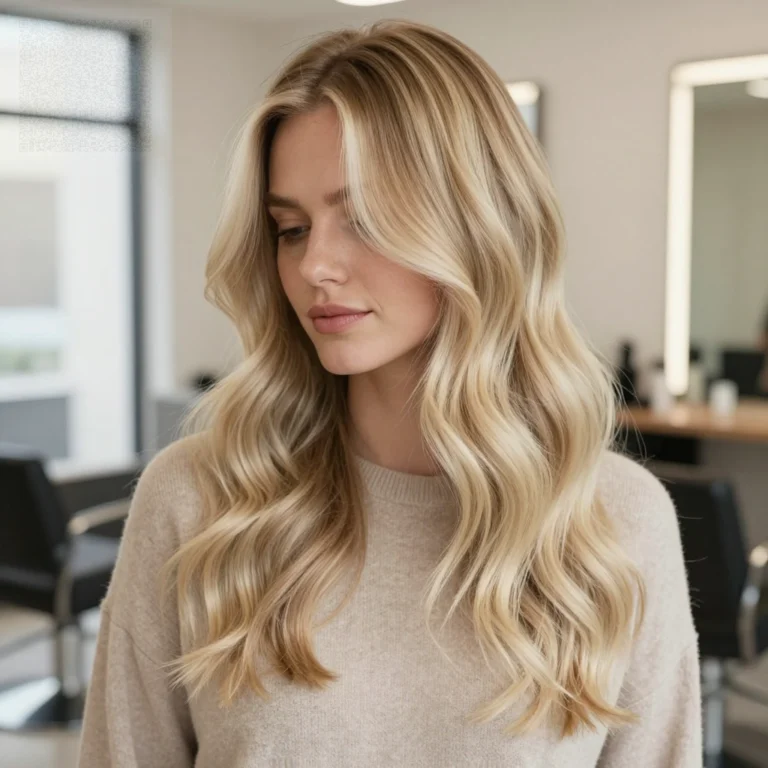
Vanilla sits between warm and cool, which makes it easier to wear than very ash or very golden blonde. The root melt gives the bright lengths something to melt into, so the colour keeps looking creamy as it grows. This is a lovely choice if your skin is neutral or if gold jewellery and silver jewellery both suit you.
- Ask your colorist: “Creamy vanilla blonde through the mids and ends with a deeper root melt, not a flat root colour.”
- Best for: light brown and dark blonde bases that want a soft, expensive-looking blonde without icy upkeep.
- Salon rhythm: gloss every 6–8 weeks; main refresh in about 3–5 months.
4. Soft face-frame blonde (a gentle money piece)
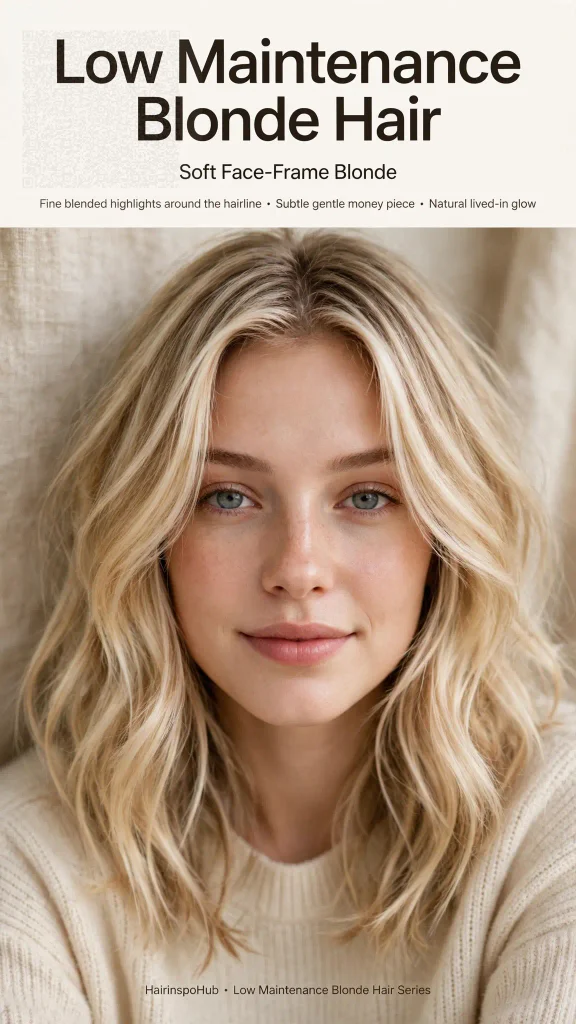
A soft face frame gives you the “your hair looks amazing — did you change something?” effect for very little upkeep. The key word is soft. A thick, high-contrast stripe to the scalp will grow out fast and look dated. Fine, blended pieces around the hairline keep the glow but stay forgiving when they grow.
- Ask your colorist: “Soft face-framing babylights that start slightly away from the root, brighter at the front and feathered into the rest of the hair.”
- Best for: anyone who wants the face to look brighter without committing the whole head to blonde.
- Salon rhythm: face-frame refresh in about 3–4 months; the rest of the hair can go longer.
5. Diffused babylights (AirTouch-style blending)
Babylights are very fine highlights that mimic the way children’s hair lightens in the sun. When the root is diffused — sometimes with an AirTouch-style method that leaves the shortest hairs out of the lightener — the grow-out is one of the softest available. They take longer to apply than chunky highlights, so the first appointment may cost more, but the months you gain between visits are the payoff.
- Ask your colorist: “Fine babylights with a diffused root — no chunky weaves and no highlights painted in one straight line to the scalp.”
- Best for: fine hair that needs brightness without looking thin, and early grey hair that needs gentle blending rather than full coverage.
- Salon rhythm: gloss every 6–8 weeks; colour refresh in about 3–5 months, depending on how much grey you want to disguise.
Warm blondes with the easiest grow-out
6. Honey blonde with natural roots
Honey is one of the most forgiving blondes on a brown base because the warmth already lives in your natural pigment. Instead of fighting your hair to become icy, your colorist works with the gold your hair lifts to naturally. Keep the root area natural and the honey pieces will look like sunlight, not stripes.
- Ask your colorist: “Honey blonde ribbons through the mids and ends, keeping my natural root and adding lowlights if the colour looks flat.”
- Best for: warm and olive skin, brown eyes, and medium to dark brown natural bases.
- Salon rhythm: gloss every 6–8 weeks; refresh in about 3–5 months.
7. Golden bronde
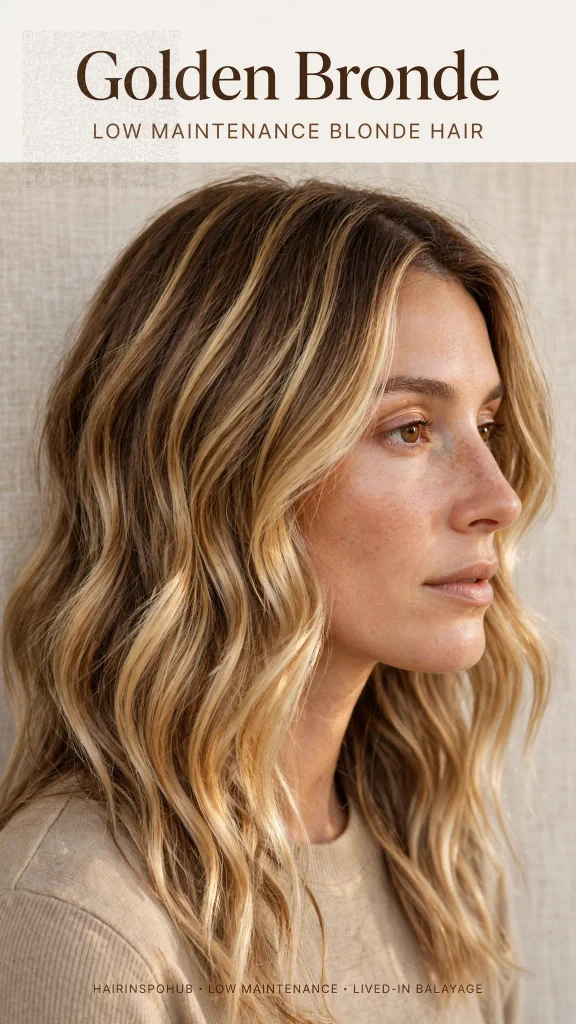
Bronde means brown plus blonde, and it is arguably the lowest-maintenance way to “go blonde” on a dark base. Your own brown stays as the foundation, so regrowth is nearly invisible. The blonde lives in ribbons and ends, which gives movement and light without a full-head bleach commitment. If you want low salon time first and brightness second, start here.
- Ask your colorist: “Bronde balayage: keep my brown base, add golden blonde only where the sun would hit, with a root smudge.”
- Best for: brunettes who want to feel lighter and brighter without promising themselves a platinum routine.
- Salon rhythm: often 4–6 months between main appointments, with a gloss when the tone feels dull.
8. Butterscotch blonde
Butterscotch deepens blonde instead of lifting it lighter, which is often healthier for hair that is already lightened. The golden depth makes roots less obvious and suits sweaters, coats, and warmer makeup. It can fade warm, so this is not the shade for someone who wants a cool, smoky finish.
- Ask your colorist: “Butterscotch tone over my existing blonde, with a slightly deeper root melt so the grow-out softens.”
- Best for: current blondes who are tired of icy upkeep and want a warmer, slower-to-show-roots shade for autumn and winter.
- Salon rhythm: tone refresh every 6–8 weeks; bigger appointment in about 3–5 months.
9. Caramel ribbon blonde
Caramel ribbons give dark hair that glossy, expensive swirl you see in salon photos. Leaving depth between the ribbons is what keeps it low maintenance: the contrast is built in, so new growth becomes part of the pattern. This is a strong choice for thicker hair and for loose curls, where each ribbon shows as the hair moves.
- Ask your colorist: “Caramel ribbon highlights with depth left at the nape and between the ribbons, plus a root smudge.”
- Best for: medium to dark brown hair that needs dimension and shine more than maximum lightness.
- Salon rhythm: gloss every 6–8 weeks; refresh in about 3–5 months.
10. Sandy blonde gradient (soft ombré)
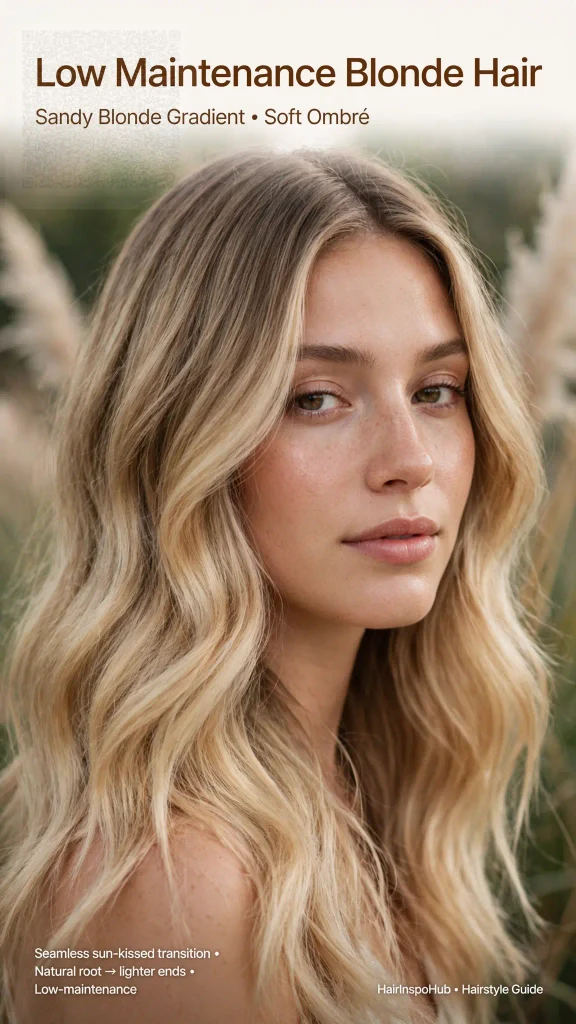
A well-blended gradient puts almost all the blonde where regrowth cannot touch it: the ends. Sandy tones sit happily between warm and cool, so the fade looks natural instead of brassy. The old, harsh dip-dye ombré is not the goal here — ask for the transition to start at different heights on different strands so it melts.
- Ask your colorist: “A soft gradient from my natural root to sandy blonde ends — no hard ombré line and no blonde at the scalp.”
- Best for: long hair and anyone who wants the longest possible gap between colour appointments.
- Salon rhythm: often 4–6 months; many people only refresh the ends and gloss in between.
Cool and neutral blondes that stay soft
11. Mushroom blonde
Mushroom blonde became a Pinterest favourite because it solves two problems at once: it looks blonde in the light, but the smoky brown base hides regrowth. Because it needs less extreme lifting than platinum, it is usually kinder to darker hair, too. Cool tones fade faster than warm ones, so a gloss is part of the deal — but a gloss is a short appointment, not a full blonding session.
- Ask your colorist: “Mushroom blonde: a cool, smoky bronde with ash and beige dimension and a soft root.”
- Best for: cool skin tones and anyone moving away from warm, brassy blonde toward a softer, modern finish.
- Salon rhythm: cool gloss every 6–8 weeks; refresh in about 3–5 months.
12. Ash-beige blonde
Ash-beige is the polished cousin of mushroom blonde: cooler, creamier, and a little brighter around the face. The lowlights matter as much as the highlights. They add the shadow that makes fine hair look thicker and stop ash tones from turning flat or grey-looking. This is a beautiful office-to-evening blonde because it looks refined even when simply blow-dried.
- Ask your colorist: “Ash-beige dimension with fine lowlights, a root shadow, and brightness kept mainly through the mids and ends.”
- Best for: cool and neutral skin, fine hair that looks fuller with dimension, and shoulder-length cuts or lobs.
- Salon rhythm: gloss every 6–8 weeks; lowlights may only need refreshing once or twice a year.
13. Smoky dirty blonde
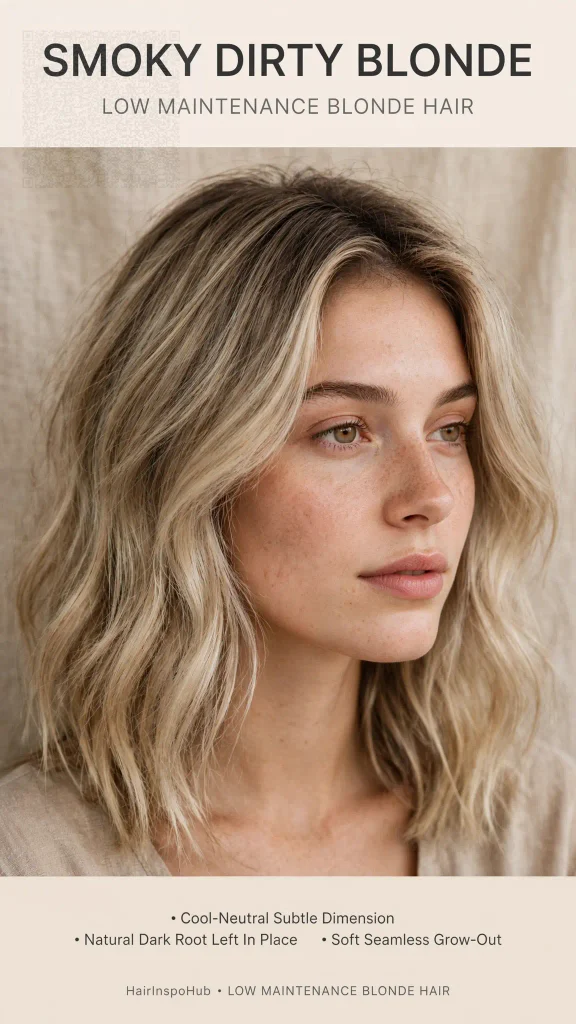
Dirty blonde has an unfair name for such a pretty colour. It is your natural base, polished: a little brightness, a little smoke, and no obvious “I had my hair done” line. If your goal is hair that looks good in a ponytail on a busy Tuesday, this is your shade. It is also a gentle first step if you are growing out old, brighter blonde.
- Ask your colorist: “Smoky dirty blonde with subtle cool dimension and my natural root left in place.”
- Best for: natural dark blondes and light brunettes who want the least noticeable grow-out of all.
- Salon rhythm: often 4–6 months; some people only gloss and trim between full appointments.
14. Vanilla cream blonde
Vanilla cream is the crowd-pleaser. It is brighter than bronde but softer than platinum, and because the tone is neutral, it rarely clashes with skin. The root melt is what makes it low maintenance. Without it, any bright blonde taken to the scalp becomes a 4–6 week root routine, no matter how pretty the tone is.
- Ask your colorist: “Vanilla cream blonde with neutral gloss and a soft root melt; bright, but not icy.”
- Best for: people who want a bright, creamy blonde that flatters most skin tones and does not demand purple shampoo on a schedule.
- Salon rhythm: gloss every 6–8 weeks; main refresh in about 3–4 months.
15. Champagne blonde
Champagne blonde catches light like a satin dress. Fine pieces woven through the hair create shine from every angle, which is why it photographs so well. Keep the root blended and the tone neutral-warm; if champagne is taken too cool and too close to the scalp, it quietly becomes a high-maintenance blonde again.
- Ask your colorist: “Champagne dimension: fine bright pieces, a neutral-warm gloss, and a blended root.”
- Best for: fine hair that needs light reflection to look fuller, and anyone who wants brightness with a soft glow rather than an icy edge.
- Salon rhythm: gloss every 6–8 weeks; refresh in about 3–4 months.
The easiest grow-outs: darker roots, smarter blonde
16. Dirty blonde with subtle highlights
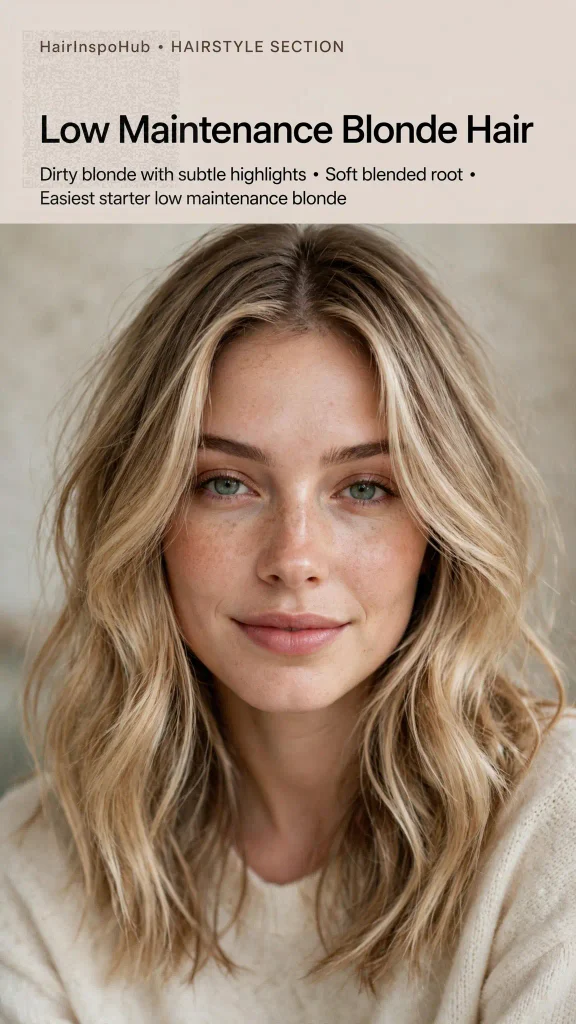
If you want one idea from this list that almost anyone can maintain, this is it. A handful of soft highlights lifts your natural colour without changing your identity. There is no line to chase, no toner emergency, and no shock when it grows. It is the blonde equivalent of no-makeup makeup.
- Ask your colorist: “Just a few subtle highlights around the face and through the top, blended at the root, in a shade close to my natural colour.”
- Best for: beginners, low budgets, and anyone whose priority is the longest time between salon visits.
- Salon rhythm: often 4–6 months; the highlight refresh is small when you return.
17. Dark bronde with blonde ends
This is the long-game blonde. Your natural dark colour does the heavy lifting at the root, so growth is a non-event. The blonde ends give you the light, summery feeling in photos and in movement. Because the ends are the oldest, driest part of your hair, ask your colorist to protect them with bond care and to lift them gradually if they are already damaged.
- Ask your colorist: “Keep my dark base through the top and mids; concentrate the blonde on the ends and around the face.”
- Best for: dark brown bases, thick hair, and anyone who wants contrast without scalp upkeep.
- Salon rhythm: often 4–6 months; ends and gloss can be refreshed on their own.
18. Lowlights blend (reverse balayage)
Sometimes the fix for high-maintenance blonde is not more blonde — it is putting some of your natural depth back. Lowlights break up that solid, washed-out look, make hair appear thicker, and give your regrowth something to blend into. Many people leaving platinum behind use this as the bridge step, and their hair health usually thanks them for it.
- Ask your colorist: “Add lowlights in my natural shade through my over-lightened hair, with a root melt, so it grows out dimensional instead of flat.”
- Best for: anyone whose blonde has become one flat, solid colour and whose roots now show as a hard contrast.
- Salon rhythm: lowlights often last 3–5 months; gloss every 6–8 weeks keeps the blend glossy.
19. Shadow-root blonde lob
A lob is a low maintenance haircut partner for low maintenance colour. It removes dry ends regularly, sits at a length that air-dries well, and shows dimension beautifully. The shadow root keeps the colour forgiving while the shape keeps the style looking deliberate. If your long blonde ends are tired, this reset can make the whole head look healthier in one visit.
- Ask your colorist: “A lob with shadow root and face-framing brightness; keep the interior slightly deeper so it looks full.”
- Best for: short to medium hair, fine hair, and busy routines that need a cut and colour that both behave.
- Salon rhythm: colour refresh in about 3–4 months; trims every 8–12 weeks keep the lob shape.
20. Long layered lived-in blonde
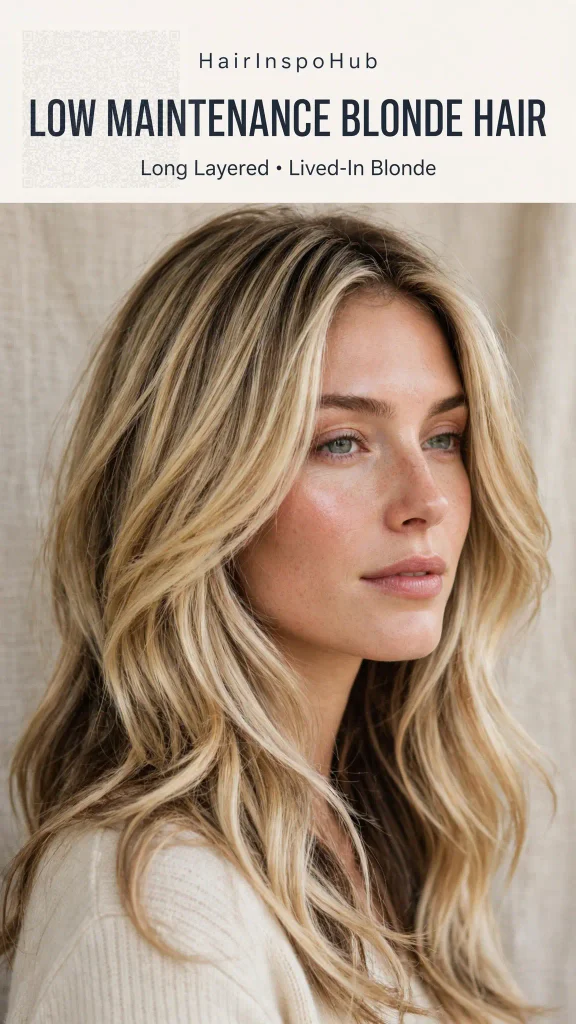
Long hair and low maintenance can be friends if the colour is placed correctly. Layers stop long blonde from hanging like one heavy sheet and let light bounce between the ribbons. Keep brightness away from the scalp, protect the old ends with masks, and let the root melt do the scheduling work. Loose waves are the natural styling partner; even air-dried texture shows the dimension.
- Ask your colorist: “Long layers with lived-in brightness through the mids and ends, a root melt, and lowlights at the nape for depth.”
- Best for: long hair that you do not want to cut, especially wavy hair that shows dimension well.
- Salon rhythm: gloss every 6–8 weeks; bigger refresh in about 3–5 months.
Choose your blonde by your natural base colour
The closer your target blonde is to your starting level, the longer it can go between appointments. Use this table as a starting point for your colorist conversation — your hair history and condition matter just as much as your natural level.
| Your natural base | Forgiving blonde direction | Why it lasts | Rough main-appointment gap |
| Dark brown (levels 2–4) | Honey, caramel, golden bronde, dark bronde | Warm tones work with the pigment your hair lifts to naturally | About 4–6 months |
| Light brown to dark blonde (levels 5–6) | Vanilla, champagne, ash-beige, mushroom, soft bronde | A small lift keeps contrast low and fading gentle | About 3–5 months |
| Medium to light blonde (level 7+) | Bright vanilla, pearl, soft ash with a root shadow | Your base is already close, so a shadow root can soften the small contrast | About 3–4 months |
One honest warning: icy platinum on a dark brown base is the opposite of this table. It can be stunning, but expect root appointments every 4–6 weeks and a serious repair routine. Choose it for the look, not for the low upkeep.
Choose your tone by skin undertone
- Warm undertone: choose honey, caramel, butterscotch, and golden bronde. Gold jewellery usually flatters you, and warm blonde will look like sunshine rather than brass.
- Cool undertone: choose mushroom, ash-beige, smoky dirty blonde, and cooler vanilla. Silver jewellery usually flatters you, and these tones cancel the yellow that bothers you.
- Neutral undertone: choose vanilla cream, champagne, sandy blonde, and beige. You can borrow from both sides, so dimension and blend matter more than the exact tone.
If you are not sure, look at the veins inside your wrist in daylight. Mostly green-looking veins often mean warm; mostly blue or purple often means cool; hard to tell often means neutral. It is a guide, not a rule — the blonde you love wearing is the right one.
What to say at the salon
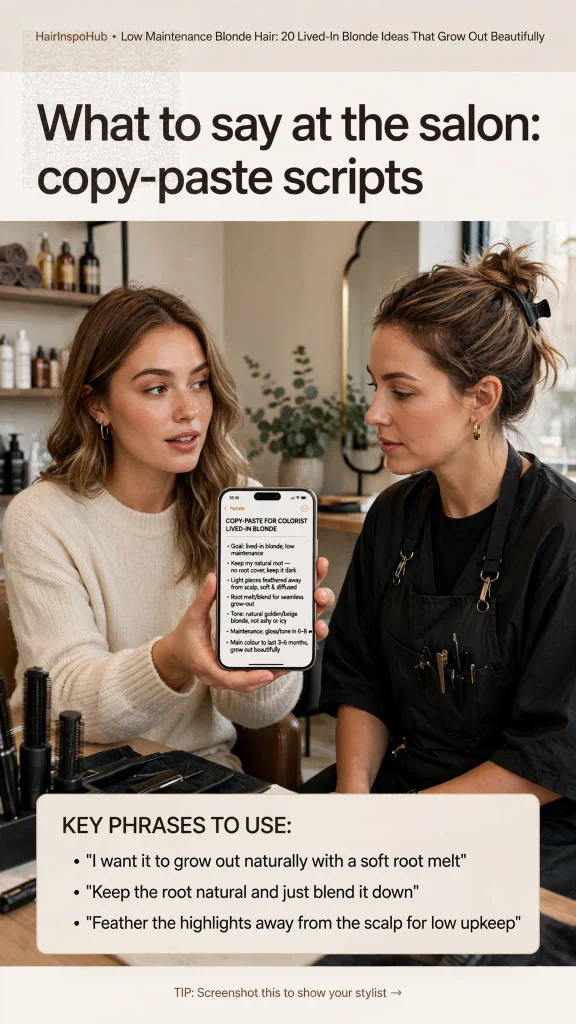
Most low maintenance blonde disappointments happen in the consultation, not in the chair. “Blonde, but natural” means different things to different people. Use one of these scripts, then show two or three photos of the grow-out you like — not just the fresh salon photo.
- “I want lived-in blonde. Please keep my natural root, feather the light pieces away from the scalp, and finish with a root melt in my natural shade.”
- “Brightness matters most around my face and through the ends. The top can stay softer and deeper.”
- “Please leave some of my natural depth between the highlights so it does not go flat and so regrowth blends.”
- “I can come back for a gloss in 6–8 weeks, but I want the main colour to last 3–5 months. Please place it for that schedule.”
- “If my hair cannot safely reach that level today, I would rather go warmer and healthier than lighter and damaged.”
Ask these three questions before the colour starts: How will this look at week ten? What will my gloss appointment include? What should I use at home for the first two weeks? A good colorist will answer all three clearly.
Your low maintenance blonde calendar
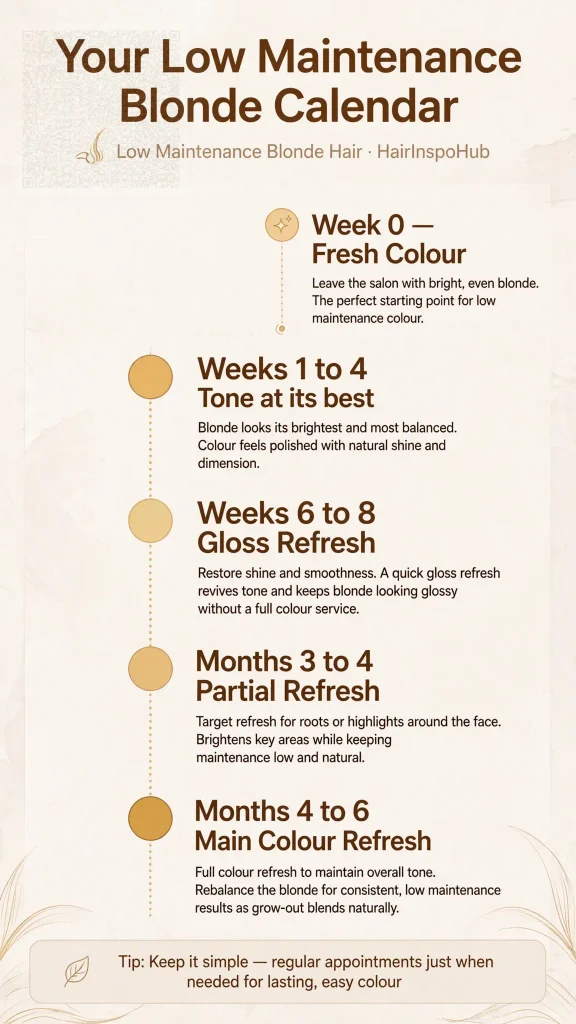
- Week 0: enjoy it, use colour-safe care, and avoid washing for the first 48 hours if your colorist advises it.
- Weeks 1–4: tone is at its best. Take a photo in daylight — this is your reference for judging fade later.
- Weeks 6–8: book a gloss or toner refresh if the colour looks dull or brassy. This is usually a short appointment. Add a trim if your ends feel rough.
- Months 3–4: many lived-in blondes still look deliberate. A partial refresh around the face can reset the whole look for less than a full appointment.
- Months 4–6: plan the bigger refresh: re-lighten where needed, re-melt the root, gloss, treat, and trim. Bronde and dirty blonde often land at the longer end of this range.
Low maintenance means fewer long appointments, not zero appointments. Skipping the gloss for six months is how a soft blonde quietly turns dull, dry, and brassy — then needs a bigger, pricier correction.
At-home care that actually keeps blonde low maintenance
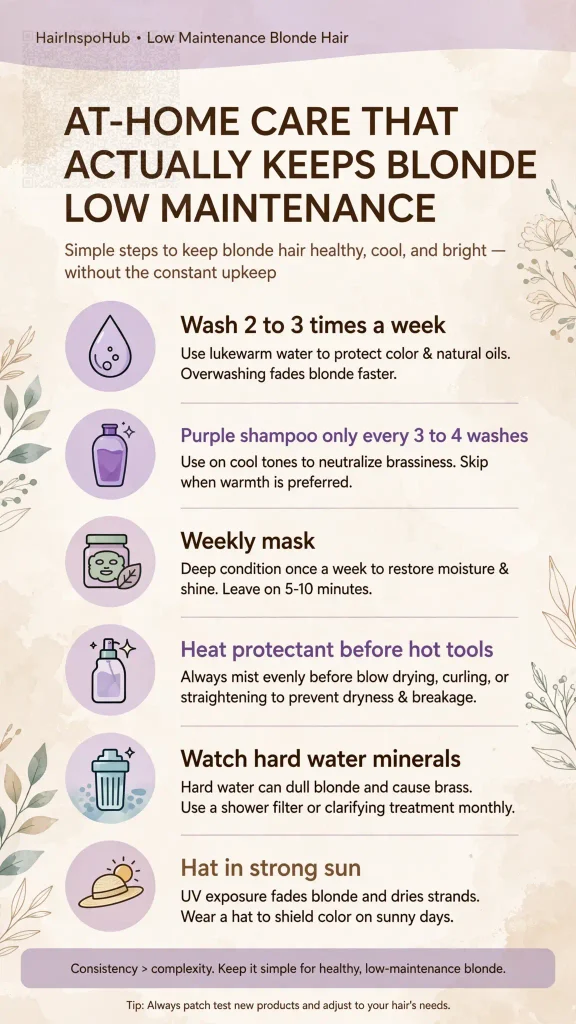
- Wash less, wash cooler: lightened hair loses colour and moisture faster in hot water. Wash 2–3 times a week if your scalp allows it, and use lukewarm water.
- Purple shampoo is a tool, not a routine: use it only every 3–4 washes and only on cool or ash tones. Over-use can make blonde look dull, dark, or uneven, and it does nothing helpful for honey or caramel shades.
- Mask weekly, balance protein: alternate moisture with a bond or protein treatment if your colorist recommends it. Too much protein can feel stiff; too little leaves lightened hair fragile.
- Protect before heat: always use heat protection, and keep hot tools moderate. Lightened ends show heat damage first.
- Watch your water: minerals in hard water can make blonde look brassy or greenish over time. A shower filter helps; wet hair with clean water and add leave-in conditioner before swimming.
- Cover up in strong sun: sun fades tone just like it fades fabric. A hat is the cheapest colour protection you own.
You do not need a shelf of products. A colour-safe shampoo and conditioner, one mask, one heat protectant, and a gloss plan will carry most low maintenance blondes.
5 mistakes that quietly make blonde high maintenance
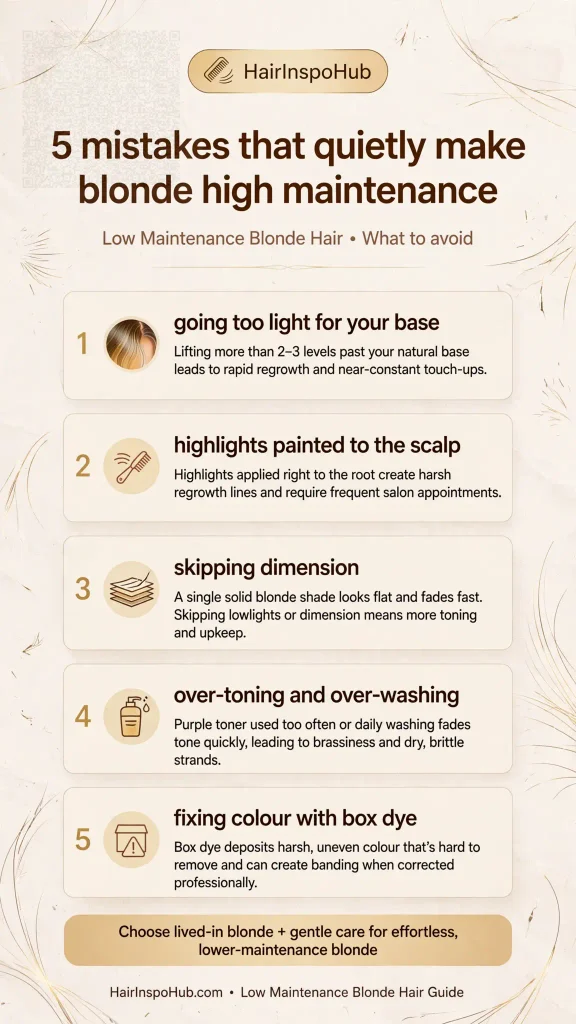
- Going too light for your base: asking for a shade many levels lighter than your base, then expecting the roots to stay invisible. The bigger the contrast, the shorter the leash.
- Highlights painted to the scalp: foils in one solid line to the scalp give the brightest day-one photo and the fastest root stripe. Always ask for diffusion at the root.
- Skipping dimension: one flat tone from root to end shows every inch of growth and makes hair look thinner. Dimension is the low maintenance secret.
- Over-toning and over-washing: using purple shampoo every wash, washing daily in hot water, and skipping the 6–8 week gloss will fade and rough up any tone.
- Fixing a colour problem with box dye: chasing a correction with box dye usually creates bands that cost more to fix professionally. Uneven, patchy, or breaking hair is a salon job.
Frequently asked questions
What is the lowest maintenance blonde hair colour?
Bronde and dirty blonde with subtle highlights are usually the lowest maintenance, followed by rooted balayage. They keep your natural base as the foundation, so regrowth blends instead of showing a line. Most people only need a gloss every 6–8 weeks and a bigger colour appointment every 4–6 months.
How often should low maintenance blonde be done at the salon?
Plan a short gloss or toner refresh every 6–8 weeks and the main lived-in colour every 3–6 months. Brighter blondes with more contrast sit closer to 3 months; bronde and dirty blonde often reach 5–6 months. Trims every 8–12 weeks keep the ends from undoing the polished look.
What is the best low maintenance blonde for dark brown hair?
Honey blonde, caramel ribbons, and golden or dark bronde are the most forgiving on dark brown hair. They work with the warm pigment your hair naturally lifts to, so fading stays flattering. Icy platinum on a dark base needs root touch-ups every 4–6 weeks and is not low maintenance.
Can low maintenance blonde blend grey hair?
Yes, diffused babylights with a shadow root are one of the best options for early grey blending. The fine, scattered light pieces disguise regrowth instead of covering it with a solid colour that grows out as a line. It camouflages grey rather than hiding every strand, so heavy, solid grey coverage still needs a different service.
Is low maintenance blonde cheaper?
Often, yes, over a year — but not always at the first appointment. Lived-in placement and fine babylights can take longer to apply, yet you may only need two or three main appointments a year instead of eight or more root visits. Add a few short gloss appointments and the yearly total is usually kinder to both your budget and your hair.
Which low maintenance blonde makes fine hair look thicker?
Dimensional blondes with lowlights, like ash-beige, mushroom, and bronde blends. The darker pieces create shadow, and shadow reads as density. One flat, very light blonde can make fine hair look thinner, especially at the ends.
Can I do low maintenance blonde at home?
You can maintain it at home with gloss, masks, and colour-safe care, but the lightening itself is safer in a salon. Balayage placement, root melting, and safe lifting on dark or previously coloured hair are hard to judge in a bathroom mirror. At-home lightening gone wrong is one of the most common reasons for expensive colour corrections.
Does low maintenance blonde damage hair less?
It can. Keeping some natural base and lifting fewer pieces, less often, usually means less lightener through the hair than repeated all-over blonding. It still lightens hair, so bond care, masks, gentle heat, and honest trims remain part of the deal.

Stella Mary is a US-based hair care enthusiast and lifestyle writer at HairInspoHub, sharing trend-forward hairstyle tutorials, styling tips, and healthy hair rituals for women of every hair type. Specializing in Pinterest-inspired looks from bridal updos and effortless braids to heatless waves and sleek ponytails. She blends timeless elegance with everyday practicality. Her mission making gorgeous, confidence-boosting hairstyles accessible to everyone, one tutorial at a time.