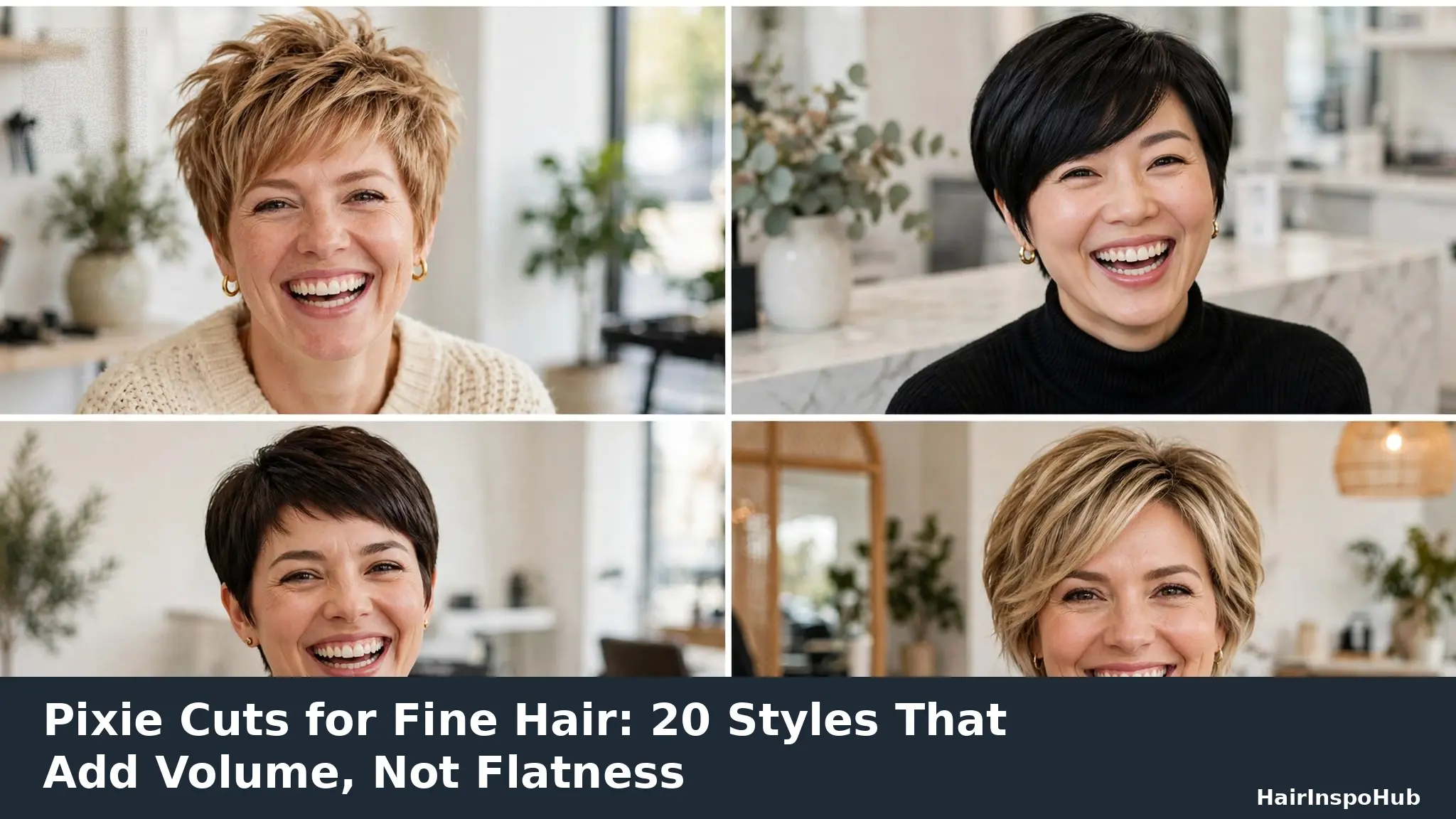
Pixie Cuts for Fine Hair: 20 Styles That Add Volume, Not Flatness

Fine hair and pixie cuts were made for each other — but only when the pixie is cut for fine hair, not just cut short. A pixie done right removes the weight that drags fine hair flat, stacks layers where volume should live, and exposes the neck and cheekbones so every strand works harder. A pixie done wrong cuts everything to the same short length, and your hair looks thinner than it did long.
This guide is only about the first kind. Below are 20 pixie cuts for fine hair, each with why it creates volume, who it suits, the exact words to say in the salon chair, and honest upkeep. You will also find the five volume rules every fine-haired pixie follows, colour tricks that fake thickness, a three-minute styling routine, and the mistakes that make fine pixies fall flat.
Quick answer: do pixie cuts work for fine hair?
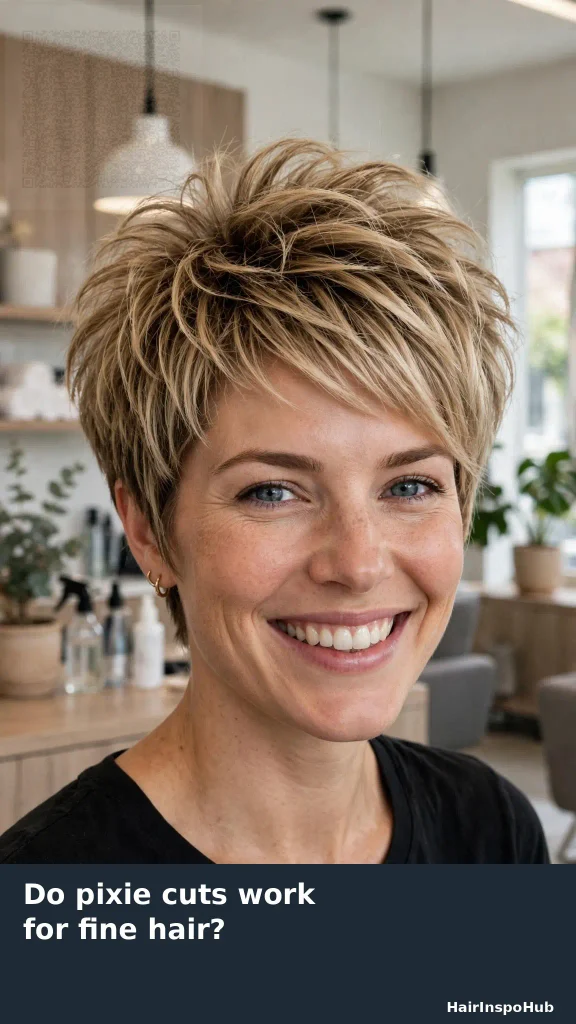
Yes — a pixie is one of the best cuts for fine hair, because removing length removes weight, and weight is what flattens fine strands. The pixies that look fullest share five traits: longer length kept on top and the crown, short stacked or tapered layers underneath for lift, point-cut or razored texture on the ends, a root that is the same depth or darker than the ends, and no over-thinning shears on the top. With those five, fine hair looks thicker short than it ever did long. Without them, any short cut can expose the scalp — the cut matters more than the length.
Fine hair vs. thin hair: the 30-second check
“Fine” describes the width of each strand; “thin” describes how many strands you have. You can have fine hair with plenty of density (looks full short) or fine hair with low density (needs careful cutting). Do this check: part your hair and look at your scalp in a bright mirror. If the scalp shows only slightly, you have fine hair with decent density — almost every pixie on this page works for you. If the scalp shows clearly in wide lines, your density is lower, and you should keep extra length on top, avoid very close-cropped sides, and skip cuts with lots of exposed scalp. A stylist can confirm in seconds — say: “Is my density low enough that we should keep the top longer?”
The 5 volume rules every fine-hair pixie follows
Keep the top and crown longer: length on top is raw material for volume. Roots lift best when the hair above them has weight to push against. Every volumising pixie leaves the crown longer than the sides and nape.
Stack or taper underneath: short, graduated layers at the nape and sides build the rounded silhouette from inside, so the top sits high instead of collapsing.
Texture the ends, don’t thin them out: point-cutting and razor texture create separation that reads as fullness. Over-thinning the top with shears removes the very bulk you need — texture the ends, keep the body.
Keep the root depth: a root one shade darker than the ends (or your natural root left untouched) gives the eye shadows to read as thickness. One flat light colour from scalp to tip makes fine hair look thinner.
Style the root, not the ends: volume is built at the scalp — mousse at the roots, blow-dry upward with your fingers or a round brush, then leave the ends alone. Overworking the ends makes fine hair look piece-y and sparse.
Pixie cuts at a glance
Shortlist two or three, then read their full entries before you book.
| What you want | Best pixie | Styling effort |
| Maximum volume | Layered textured pixie, stacked crown pixie | 2–3 minutes daily |
| Elegant and classic | Gamine pixie, tapered pixie | 1–2 minutes |
| Edgy and bold | Undercut pixie, spiky pixie, asymmetrical pixie | 3–5 minutes |
| Soft and feminine | Side-swept pixie, bixie, long pixie | 2–4 minutes |
| Curly fine hair | Curly pixie, wavy pixie with long crown | 2–5 minutes with product |
| Grow-out friendly | Long pixie, bixie | Trims every 6–8 weeks still |
| Colour that fakes thickness | Any pixie + root shadow and highlights | Gloss every 4–6 weeks |
Layered and textured pixies (the volume workhorses)
1. Layered textured pixie
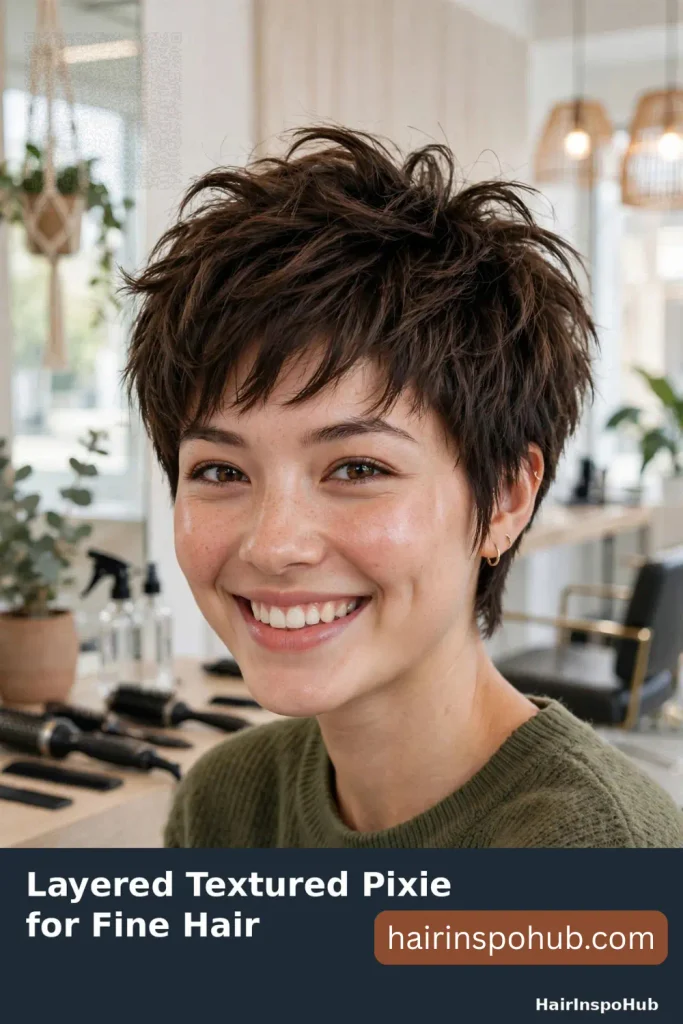
Why it works: Short layers stacked through the crown, each one lifting the one above. The classic fine-hair solution: texture creates shadows and separation, which the eye reads as density.
Best for: Fine hair with decent density, anyone who wants the most volume for the least styling.
Ask your stylist: “Layered pixie with stacked layers on the crown for volume, point-cut the ends, keep my root depth.”
Upkeep: Trim every 4–6 weeks; layers lose their lift fast on fine hair.
2. Pixie with a long crown
Why it works: Everything below the crown is kept short and neat while the top stays long enough to lift, flip or sweep. The contrast between short underneath and long on top is what builds height.
Best for: Low-density fine hair (the long top covers the scalp), anyone nervous about going very short all over.
Ask your stylist: “Keep the crown long for coverage and volume, short and tapered at the nape and sides.”
Upkeep: Trim every 5–6 weeks; the long crown grows shaggy quickly.
3. Tapered pixie
Why it works: Sleek sides and nape that graduate neatly into a fuller top. Polished without being flat — the taper gives structure while the top keeps its body.
Best for: Professional settings, straight fine hair, anyone who wants a pixie that looks tidy all day.
Ask your stylist: “Tapered pixie, neat at the sides and nape, fullness left through the top.”
Upkeep: Trim every 4–5 weeks to keep the taper sharp.
4. Choppy pixie
Why it works: Deliberately uneven, piece-y ends all over. The choppiness stops fine hair from clumping into one flat sheet — every piece catches light differently.
Best for: Fine straight hair that lies flat, casual dressers, anyone who styles with fingers not brushes.
Ask your stylist: “Choppy pixie with piece-y texture on the ends — but don’t over-thin the top.”
Upkeep: Trim every 4–6 weeks; choppy ends show growth unevenly.
5. Razored pixie
Why it works: Cut with a razor instead of shears for feathered, wispy ends. Razor work creates the softest possible texture — ideal when you want movement without removing bulk.
Best for: Fine hair that needs softness rather than sharpness, shorter pixies that should not look severe.
Ask your stylist: “Razor-cut pixie for soft texture. Please don’t razor-thin it to nothing on top.”
Upkeep: Trim every 4–6 weeks; razor texture grows out softly, which is forgiving.
Feminine and soft pixies
6. Side-swept pixie
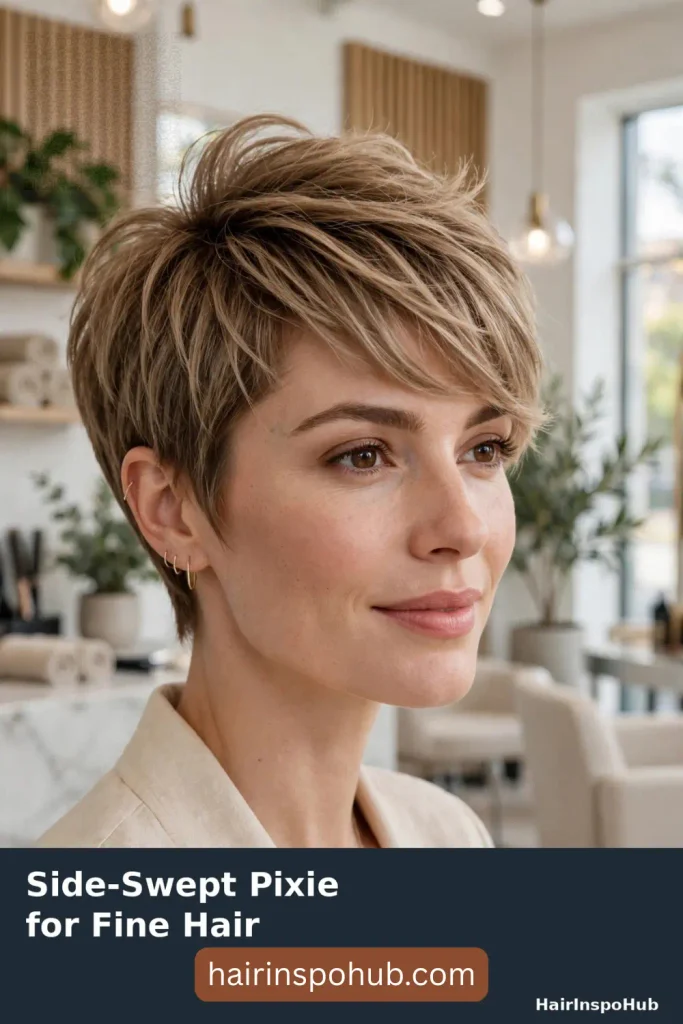
Why it works: Long fringe swept across the forehead into the cut. The sweep creates a diagonal line — one of the most reliable volume illusions — and covers a high or wide forehead beautifully.
Best for: Fine hair with a round face or high forehead; see our round-face short hair guide if your face shape is your main concern.
Ask your stylist: “Pixie with a long side-swept fringe, keep the crown stacked for lift.”
Upkeep: Trim every 5–6 weeks; the fringe is the first thing to overgrow.
7. Pixie with wispy bangs
Why it works: Soft, feathered fringe over a short pixie. The bangs add weight and visual interest at the front where fine hair can otherwise look sparse.
Best for: Straight fine hair, anyone who wants bangs without a heavy solid fringe line.
Ask your stylist: “Wispy bangs, feathered not blunt, blended into the sides.”
Upkeep: Trim bangs every 3–4 weeks between full cuts if they grow into your eyes.
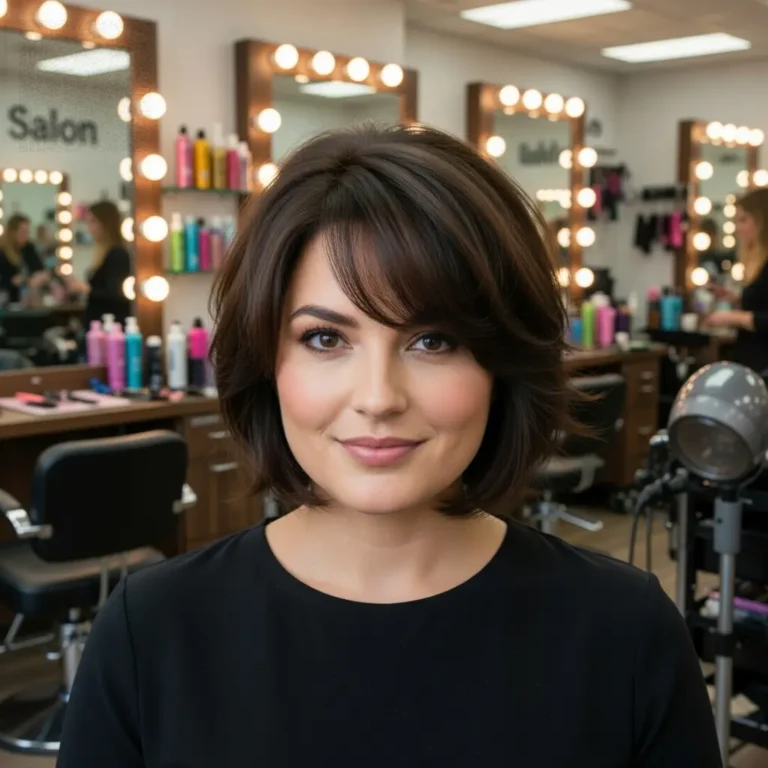
8. Bixie (pixie-bob)
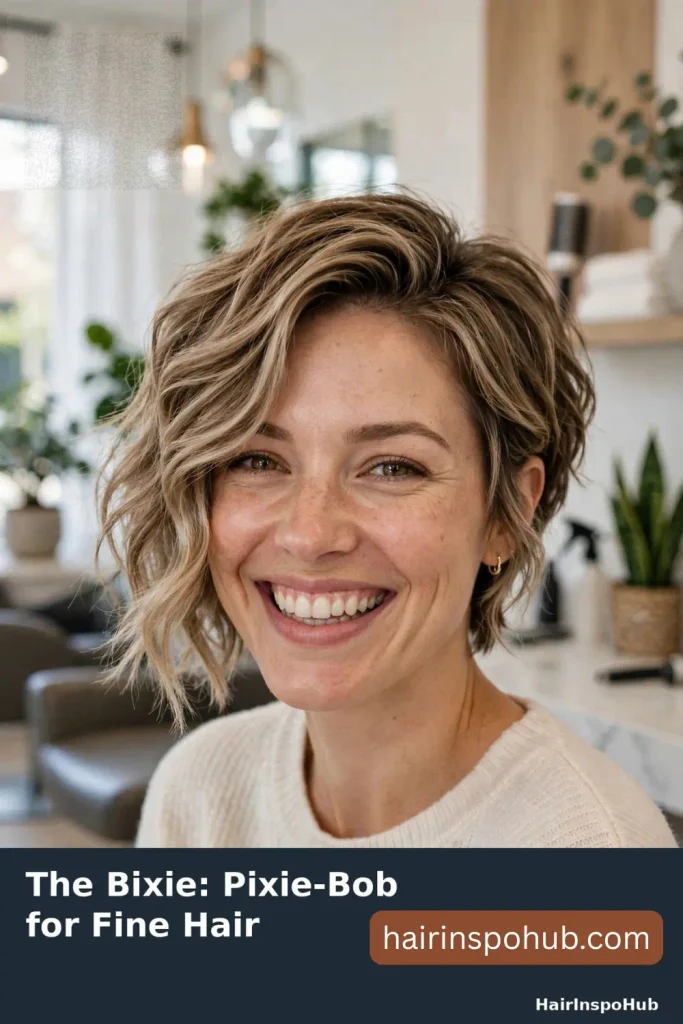
Why it works: The hybrid: pixie shortness at the back, bob length at the front and sides. More hair to play with than a true pixie, and the extra length around the face softens everything.
Best for: Anyone scared of a full pixie, fine hair that looks better with some length around the face.
Ask your stylist: “A bixie — short stacked back, longer through the front and sides.”
Upkeep: Trim every 5–7 weeks; it holds its shape longer than a true pixie.
9. Long pixie (the grow-out pixie)
Why it works: Pixie proportions with several inches on top — long enough to tuck, wave or sweep. The easiest pixie to maintain and the safest first step into short hair.
Best for: First-time pixies, low-density fine hair, anyone growing out a shorter cut.
Ask your stylist: “Long pixie, keep length on top and the fringe, clean up the nape.”
Upkeep: Trim every 6–8 weeks; the most forgiving option on this list.
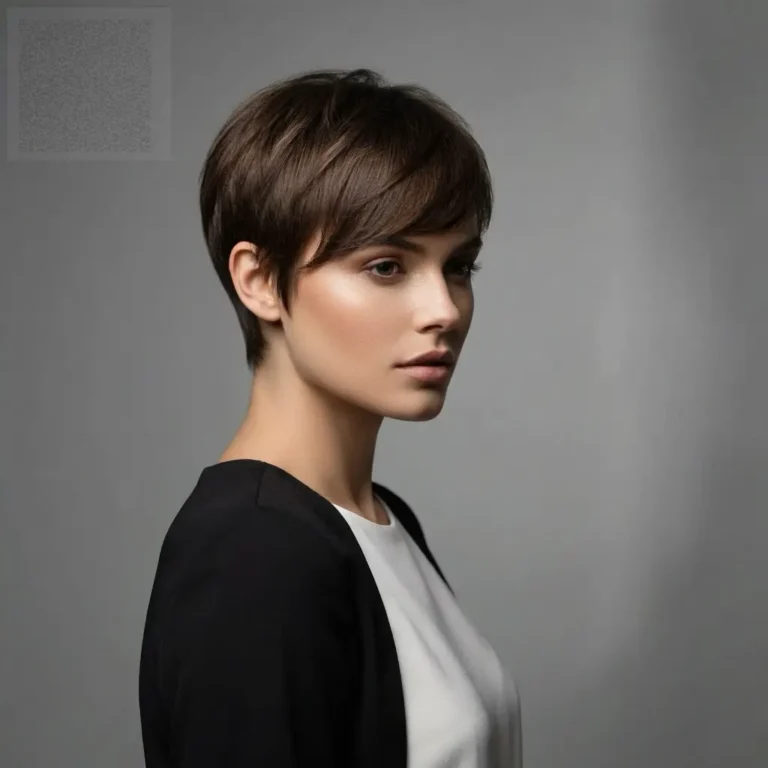
10. Gamine pixie
Why it works: The classic Audrey shape: neat, close at the sides, softly longer on top, every edge deliberate. Elegant rather than edgy, and it never looks dated.
Best for: Fine hair with good density, petite features, anyone who wants timeless over trendy.
Ask your stylist: “Classic gamine pixie — neat sides, soft length on top, nothing spiky.”
Upkeep: Trim every 4–5 weeks; precision shapes show growth fast.
Bold and edgy pixies
11. Undercut pixie
Why it works: Sides and nape clipped short (or faded) with length kept on top. Removing the bulk underneath makes the top look dramatically fuller by contrast — a volume trick, not just a style choice.
Best for: Dense fine hair, bold dressers, anyone who wants maximum top volume.
Ask your stylist: “Undercut pixie, faded or clipped at the sides, keep the top long for volume.”
Upkeep: Fade touch-up every 3–4 weeks; undercuts grow out visibly.
12. Spiky pixie
Why it works: Short crown lifted into defined spikes with texturising product. Spikes are vertical volume you can see from across the room — fine hair spikes easily with the right product.
Best for: Confident stylers, fine straight hair, anyone who wants an edgy look that is honest about its upkeep.
Ask your stylist: “Spiky pixie with short textured layers I can spike up.” Ask for a product recommendation before you leave the chair.
Upkeep: Trim every 4 weeks; spikes need a sharp shape. Daily styling is part of the deal.
13. Asymmetrical pixie
Why it works: One side longer than the other — often long on one side, cropped on the other. The diagonal line creates movement and makes fine hair look deliberately styled rather than limply short.
Best for: Fine hair with an oval or square face, anyone who wants a statement cut.
Ask your stylist: “Asymmetrical pixie, long sweep on one side, short and neat on the other.”
Upkeep: Trim every 4–5 weeks; asymmetry looks best sharp.
14. Pixie with shaved or faded side
Why it works: A close fade on one side (or a shaved design line) with a longer top swept over. The contrast is the point: one side shows the scalp on purpose, the other looks twice as full.
Best for: Dense fine hair only — low-density hair cannot hide a shaved side gracefully.
Ask your stylist: “Close fade on one side, keep the top long enough to sweep over.”
Upkeep: Fade refresh every 2–3 weeks if you want it crisp.
Pixies for wavy and curly fine hair
15. Curly pixie
Why it works: Curls kept longer on top, shaped close at the sides. Each curl is its own little volume unit — fine curly hair gains bounce and shape when length stops dragging the curls flat.
Best for: Naturally curly or wavy fine hair, anyone whose curls disappeared under long hair’s weight.
Ask your stylist: “Curly pixie, keep the curls longer on top, shape the sides close. Cut it dry or mostly dry if my curl pattern allows.”
Upkeep: Trim every 6–8 weeks; curls forgive growth. Define with curl cream, not heavy gel.
16. Wavy pixie with long crown
Why it works: Straight-ish sides with the top left long enough to wave. The wave does the volumising work — even fine hair looks thicker when the ends bend instead of hanging straight.
Best for: Slight natural wave, low-effort stylers, anyone between straight and curly.
Ask your stylist: “Pixie with a long wavy crown, neat sides.”
Upkeep: Trim every 5–6 weeks. A quick scrunch with texturising spray is the whole routine.
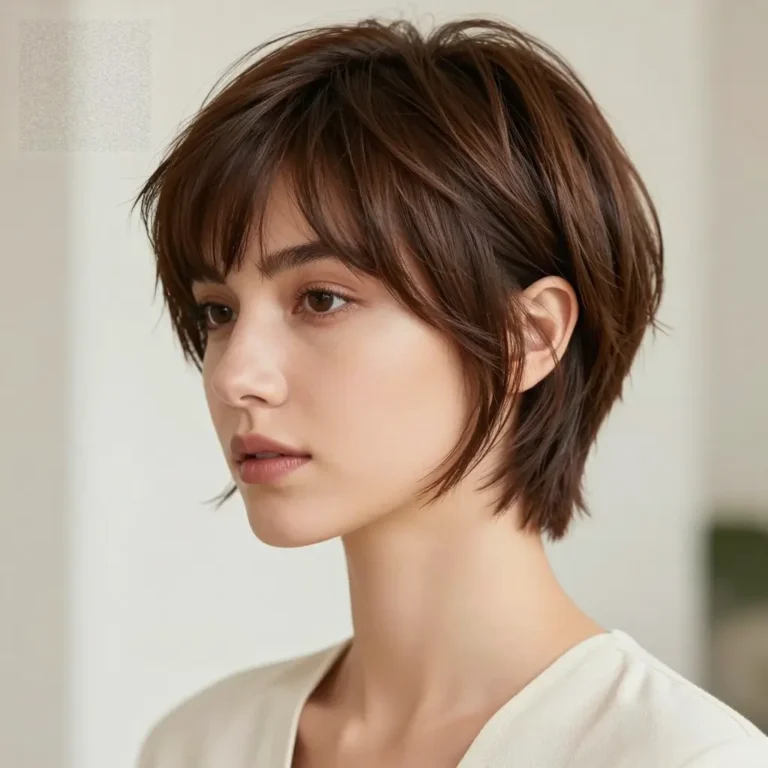
17. Pixie shag
Why it works: Feathered, 70s-inspired layers with a soft fringe — shag proportions on pixie length. The layered fringe and piece-y crown are made for fine hair that needs movement.
Best for: Wavy fine hair, retro dressers, anyone who wants texture without spikes.
Ask your stylist: “Pixie shag, feathered layers, soft fringe.”
Upkeep: Trim every 6–8 weeks; the shag grows out into a nice long pixie.
Pixies with bangs and parts that build volume
18. Pixie with curtain bangs
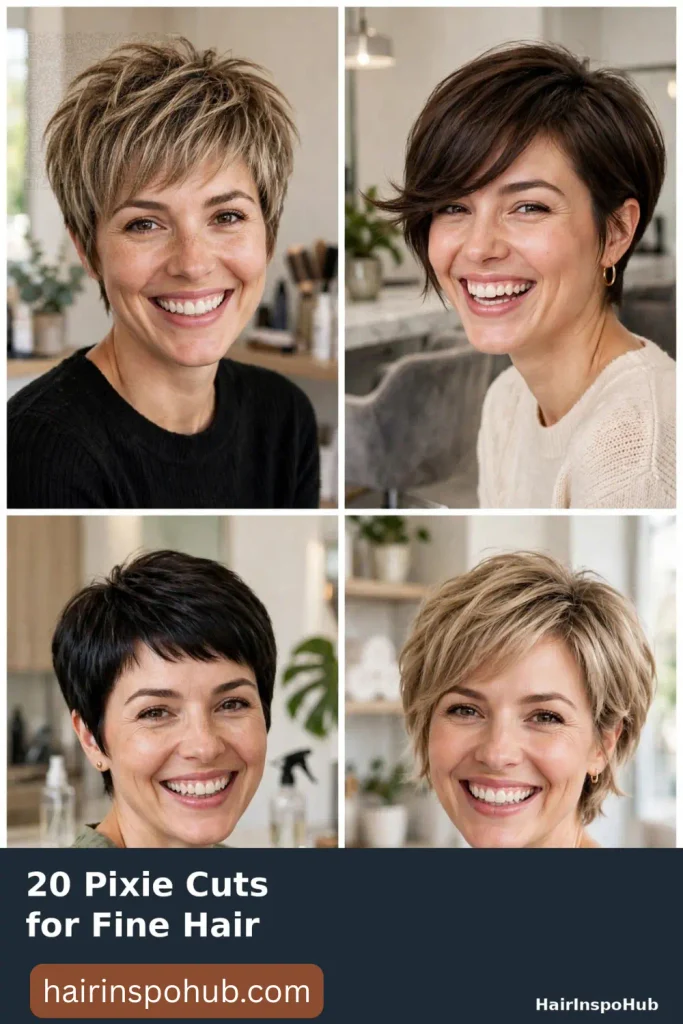
Why it works: The fringe is parted in the middle and sweeps to both sides, blending into the cut. Curtain bangs widen the front of a pixie, which balances a narrow forehead and adds face-framing fullness.
Best for: Fine hair with a narrow or long face, anyone growing out a fringe.
Ask your stylist: “Curtain bangs on my pixie, parted in the centre, blended into the sides.”
Upkeep: Trim bangs every 3–4 weeks.
19. Side-part pixie
Why it works: A deep side part with the crown flipped over. The part is doing real work: hair swept across the head from a deep part always looks thicker than a centre part.
Best for: Fine straight hair that falls flat with a middle part, anyone with a cowlick they can exploit.
Ask your stylist: “Pixie with a deep side part, crown left long enough to flip.” Train the part while the hair is damp.
Upkeep: Trim every 5–6 weeks.
20. Swept-back pixie
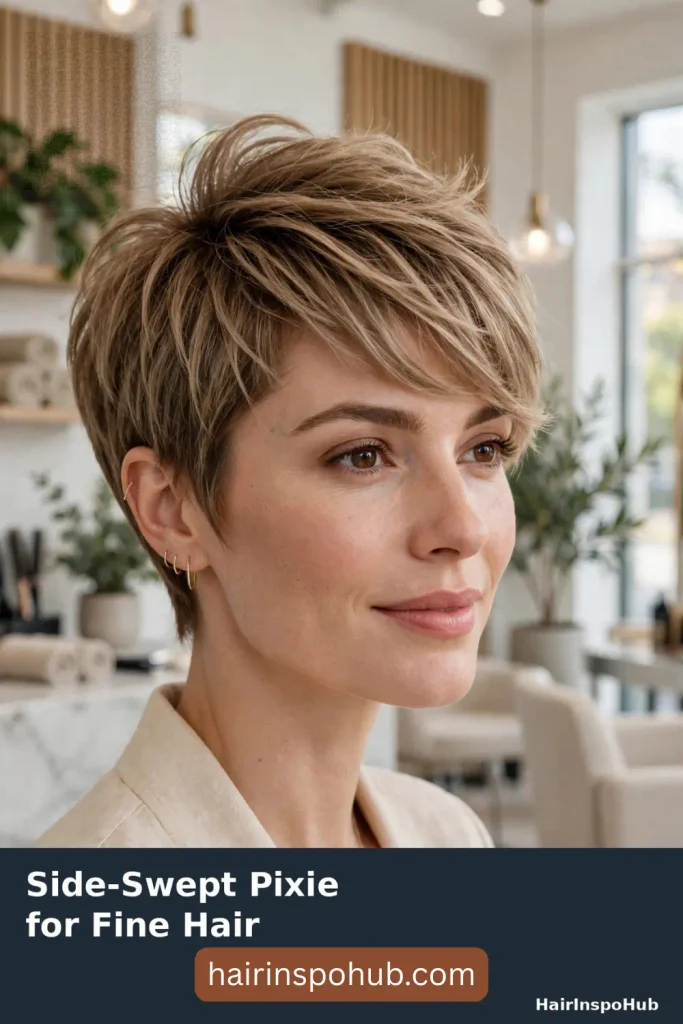
Why it works: The whole top brushed back off the face with volume at the roots. Showcases the face and earrings, and the back-swept direction lifts every strand away from the scalp.
Best for: Confident wearers, fine hair with good density, silver and salt-and-pepper pixies especially.
Ask your stylist: “Swept-back pixie with root lift through the crown.”
Upkeep: Trim every 5–6 weeks; needs a root-lifting product to hold the sweep.
Colour tricks that make fine pixies look thicker
| Colour trick | What it does | Upkeep |
| Root shadow / root melt | Dark root against lighter ends creates depth the eye reads as thickness | Re-melt every 6–8 weeks |
| Babylights or fine highlights | Multi-tone strands look dimensional and fuller | Gloss every 4–6 weeks |
| Face-framing money piece | Brightness at the front draws the eye and adds perceived fullness | Refresh every 6–10 weeks |
| Salt-and-pepper / dimensional grey | Mixed tones look naturally thicker than one flat colour | Lowest; grow it out with glosses |
| Avoid one flat light colour | Solid light blonde from root to tip removes all shadow — reads thin | — |
Our dark hair with highlights guide explains placement and upkeep in detail if you want to combine highlights with your pixie — the shade-gap and technique tables apply just as well to short hair.
The 3-minute fine-hair pixie routine
Do this on towel-dried hair, root to tip — in that order:
- Work a golf-ball of volumising mousse through the roots only, not the ends.
- Blow-dry with your head flipped forward or to the opposite side, lifting at the roots with your fingers. Rough-dry 90% of the way.
- Finish the last 10% with a small round brush on the crown only, directing hair up and back (or to the side for a side-swept pixie).
- Once cool, pinch a pea of texturising paste or fibre cream through the ends only — never the roots.
- On day two, revive with dry shampoo at the roots instead of re-washing; fine hair falls flat when over-washed.
When a pixie is the wrong choice (honest exceptions)
A pixie is the best cut for most fine hair, but not for every head. Here are the cases where a stylist will steer you to something else — and what to ask for instead.
| Your situation | Why a pixie struggles | Ask for this instead |
| Very low density with wide scalp show | Short hair cannot hide the scalp; close crops expose it | A long pixie or bixie with the crown kept long for coverage |
| Strong double crown or aggressive cowlick | Short hair obeys the cowlick completely — you cannot weigh it down | Keep the top longer and cut with the cowlick’s direction, or choose a side-swept style that uses it |
| You will not style it, ever | Fine pixies need 2–3 minutes of root work; air-dried and untouched, they lie flat | A wash-and-go bob with internal layers — more forgiving unstyled |
| Very curly hair you want to wear straight | A straightened pixie on tight curls means daily heat on short, fragile hair | A curly pixie worn curly, or a longer cut |
| Recent major hair loss (shedding phase) | A new short cut during active shedding can look thinner before it looks better | Wait until shedding stabilises, then cut — ask your stylist’s honest opinion |
None of these are permanent bans — they are timing and technique notes. A good consultation question covers all of them: “Is there anything about my hair, growth patterns or density that makes a pixie a bad idea for me right now?”
The golden rules: product at the roots, not the ends; light products, not heavy ones. Heavy oils, butters and silicone-loaded serums coat fine strands and collapse them — if a product makes your hair feel sleek, it is probably working against your volume.
5 mistakes that make fine pixies fall flat
1. Cutting everything the same short length: a uniform buzz-with-length removes all the contrast that reads as volume. Keep the top longer than the sides — always.
2. Over-thinning the crown: thinning shears on top remove bulk and expose scalp. Texture the ends, never hollow out the crown.
3. Conditioning the roots: conditioner belongs mid-lengths to ends on fine hair. Roots weighed down with conditioner will never lift, no matter the cut.
4. One flat light colour: solid light blonde or all-over light brown from scalp to tip flattens the look. Ask for root depth or a few dimensional pieces.
5. Stretching trims too long: a pixie that has grown 3–4 weeks past its trim loses its stacked shape, and stacked shape is where the volume lives.
What to say at the salon: 3 copy-paste scripts
1. Maximum volume: “I have fine hair and I want a pixie with real volume. Please keep the top and crown long, stack the layers underneath, point-cut the ends for texture, and keep my root depth. No thinning shears on the top.”
2. Low density, nervous: “My hair is fine and not very dense, and I don’t want my scalp to show. Which pixie keeps the most coverage on top? I’m open to a long pixie or a bixie.”
3. Colour plus cut: “I want highlights that make my fine pixie look thicker. Can we do a root shadow with some fine highlights or a money piece, so there’s dimension?”
Bring photos of pixies on hair like yours — same fineness, similar density, and ideally your face shape. A photo of a pixie on thick hair will not predict your result.
Maintenance calendar
| Cut | Trim every | Why |
| Precision pixie (tapered, gamine, spiky, asymmetrical) | 4–5 weeks | Sharp shapes collapse fast on fine hair |
| Textured or layered pixie | 4–6 weeks | Layers lose lift as they grow |
| Long pixie / bixie | 6–8 weeks | Extra length forgives growth |
| Undercut / faded pixie | 2–4 weeks for the fade | Fades grow out visibly; top can wait longer |
| Fringe tidy-up | 3–4 weeks | Bangs are the first thing to overgrow |
Fine pixie by face shape (quick notes)
| Face shape | Best pixie details | Avoid |
| Round | Crown height, side-swept fringe, longer top | Width at the cheeks, blunt straight fringe |
| Oval | Almost anything; gamine and side-swept shine | Hiding the whole forehead under heavy fringe |
| Square | Soft texture, side-swept, longer pieces at temples | Blunt geometric edges at the jaw |
| Heart | Fullness at the nape and sides, wispy fringe | Too much volume only at the crown |
| Long / narrow | Curtain bangs, width at the sides, bixie | Excessive crown height with flat sides |
Our short hair for round face guide goes deep on face-shape rules if that is your main concern.
The bottom line
A pixie is not a risk for fine hair — a bad pixie is. Keep the top long, stack the underneath, texture the ends instead of thinning them out, protect your root depth, and style the roots before anything else. Do that, and fine hair looks thicker in a pixie than it ever did long — with a two-minute routine and trims on schedule.
Frequently asked questions
Do pixie cuts make fine hair look thicker?
Yes, when the pixie is cut for fine hair: longer on top, stacked layers underneath, textured ends, and root depth preserved. These create shadows and lift that read as density. A pixie cut uniformly short with over-thinning can do the opposite, which is why the cut details matter more than the decision to go short.
How often should a fine-hair pixie be trimmed?
Every 4–6 weeks for most pixies, because stacked layers and tapers lose their shape quickly on fine hair. Precision and spiky pixies need 4–5 weeks; long pixies and bixies can stretch to 6–8. Undercut fades need refreshing every 2–4 weeks.
What is the best pixie for very thin, low-density hair?
A long pixie or bixie with the crown kept long for coverage, soft texture, and no close-cropped sides or heavy thinning on top. Salt-and-pepper or root-shadow colour also helps, because mixed tones disguise scalp show-through better than one flat colour.
Can fine curly hair get a pixie?
Absolutely — curls are natural volume units. Ask for a curly pixie with length kept on top and the sides shaped close, cut with your curl pattern in mind (ideally dry or mostly dry). Define with curl cream rather than heavy gel, which pulls curls flat.
Will bangs make my fine hair look thinner?
A heavy, thick blunt fringe uses up a lot of your hair and can make the rest look sparse. Wispy, feathered, side-swept or curtain bangs are the fine-hair answers — they add front interest without stealing density from the top.
What products are best for styling a fine-hair pixie?
Volumising mousse at the roots, a pea of texturising paste or fibre cream on the ends, and dry shampoo on day two. Avoid heavy oils, butters and silicone-heavy serums on fine hair — they coat the strands and collapse the volume you just built.
How do I grow out a pixie on fine hair?
Grow it in stages: keep the nape and sides trimmed while the top grows, and let it pass through a long pixie and then a bixie. Regular shaping trims every 6–8 weeks keep it looking intentional instead of overgrown.
Does colour really make fine hair look thicker?
It creates the illusion of thickness: a darker root against lighter ends (root shadow), fine highlights for dimension, or mixed salt-and-pepper tones all give the eye shadows and contrast to read as density. One flat light colour from root to tip does the opposite.

Stella Mary is a US-based hair care enthusiast and lifestyle writer at HairInspoHub, sharing trend-forward hairstyle tutorials, styling tips, and healthy hair rituals for women of every hair type. Specializing in Pinterest-inspired looks from bridal updos and effortless braids to heatless waves and sleek ponytails. She blends timeless elegance with everyday practicality. Her mission making gorgeous, confidence-boosting hairstyles accessible to everyone, one tutorial at a time.